
Reviews
Review: The Bled – Heat Fetish
The Bled – Heat Fetish

Released: March 2nd, 2010
Label: Rise Records
Purchase: iTunes | Amazon
The past year has been tumultuous for The Bled. They were on the brink of calling it a day due to the economic recession putting an ever increasing strain on the financial stability of the band. As a result, all but two members from the unit that brought us Silent Treatment in 2007 remained.
Fortunately, the two remaining members were guitarist and chief songwriter Jeremy, and unmistakable frontman/vocalist James. As such, The Bled have not lost their signature sound and with the inclusion of a whole new line-up, I’d argue that Heat Fetish brings a whole new level of energy and urgency to the band that has not been heard since the debut Pass the Flask.
One of my main concerns was how the band would deal with the departure of drummer Mike Pedicone, whose skills behind the kit throughout The Bled’s discography have been superb. That fear diminished right after the opening track. I’m not sure where they find these drummers, but new sticksman Josh Skibar not only comfortably fills Pedicone’s shoes but also brings his own frantic style to proceedings, which helps make this album an extremely impressive achievement.
Musically, Heat Fetish delivers the staple sound that we’ve come to know and love with The Bled: heavy, down-tuned and aggressive songs with screamed vocals, breakdowns and spasmodic rhythms that traverse through various timings. If you turn your nose up at any of the above, then go no further with this band as it isn’t for you. If however, that sounds like your cup of tea, then trust me you will want to put the kettle on and make yourself a huge pot of it.
As ever, I find myself yet again in awe of James Munoz. There are very few vocalists in this genre that can hold a candle to him and each time I feel that he can’t progress any further with his voice, I’m proven wrong once more. One of my biggest gripes with the hardcore genre is the inability of screamed vocalists to emit any range from their vocals. Most screamers have a guttural shout, or a higher pitched yell, that they stick to throughout their songs, making every song sound repetitive and all too familiar. James has an uncanny ability to surprise you with his vocals, moving from low to high, to shout to clean in any given song. This is what makes The Bled’s music a treat to listen to from one album to the next: you just never know what to expect.
The band tried to mix up their heavy elements with a more melodic edge on sophomore album Found in the Flood but with very mixed results. Scattered throughout this album are fine examples of how the band have developed this side of their music without compromising on the quality. “Meet Me in the Bone Orchard” is a prime example, where they have successfully integrated face-tearing aggression with haunting melody that helps to make Heat Fetish stand-alone as a complete package.
I’ve grown to appreciate every album The Bled have put out, but I’ve not always felt like they’ve achieved a faultless album since the release of their debut Pass the Flask. Something has always stood in the way; be it the production, or the missed attempts at being creative. The last couple of albums have been good, but too precise and polished to feel natural.
8.4
Standout Tracks: “Meet Me in the Bone Orchard”, “Crowbait”, “Smoke Breaks”
Review: Heinali and Matt Finney – Lemonade EP
Heinali and Matt Finney – Lemonade EP
Released: June 15, 2010
Label: Self-released
Purchase: iTunes | Amazon
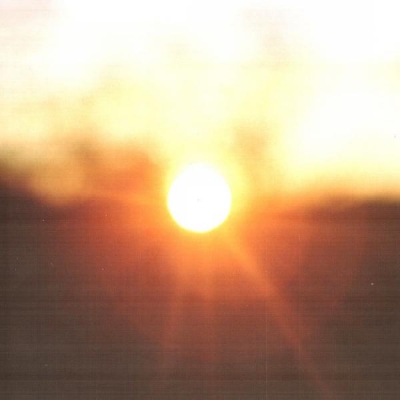
Ukrainian composer Heinali and American spoken-word poet Matt Finney may live on opposite ends of the world, but it is virtually impossible to tell. When the two combine on their second collaboration Lemonade, the miles and miles separating the two artists is undetectable, resulting in one of the darkest and most depressing records of the year.
The nine track EP couples dark, droning ambience by composer Heinali with ominous, angsty lines from Matt Finney, ultimately creating a troubling, yet intriguing piece of art. From the very start of the album, Heinali and Matt Finney engulf the listener and never let go, taking them on a whirlwind emotional journey into the lives of both musicians. Matt’s voice, low and raspy (think Christian Bale’s Batman mixed with Brand New’s Jesse Lacey), blends perfectly with the tug and pull of Heinali’s backing instrumentals.
Lemonade, as a whole, seems more fit for a movie soundtrack than a standalone record. Ultimately, the intertwining sounds of Lemonade are intriguing but are all too similar to work effectively together, resulting in a rather cinematic effect. For the most part, Lemonade is a holistic affair, with the overall vibe of the record generally more appealing than that of each individual part.
One of the best examples is sixth track “The Dream”, which seems to stick out because it is stylistically different from the rest, with Heinali focusing on a somber piano line and some somewhat uplifting orchestral sounds. Over top, Matt Finney croaks, “The ones I claimed to be heroes ended up being drunks or addicts/ Ended up putting guns in their mouths or tying ropes around their necks so I built walls instead.” Powerful? Indeed.
For some reason, the eccentric composition of Heinali and the melancholic lines from Matt Finney just seems to click. The last three tracks of the EP feature solo performances and highlight the fact that the two artists are definitely better when working together. It is the combination of the two – a rather unexpected, but gladly welcomed combination to say the least – that results in the true brilliance of Lemonade.
Download Lemonade on their Bandcamp at a pay-what-you-want rate.
6.5
Standout Tracks: “Lemonade” and “The Dream”
Review: Kid Cudi
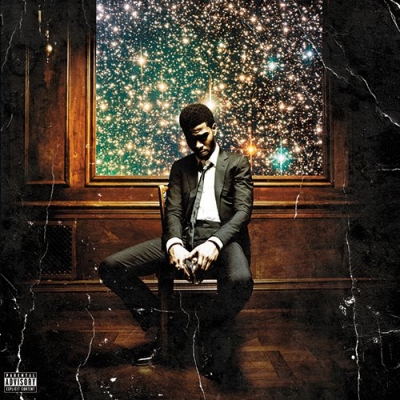
Kid Cudi – Man On The Moon II: The Legend of Mr. Rager
Released: October 9, 2010
Label: Motown, G.O.O.D. Music
Purchase: iTunes | Insound | Amazon
It isn’t everyday that you’re invited into the world of a superstar. It isn’t everyday that an artist unabashedly opens up about their recent struggles, especially those that are attempting to cope with fame and superstardom. And most of the time, even if said artist does choose to open up, it isn’t everyday that we can relate. Those that somehow bridge the gap between superstardom and ordinary life are the ones that succeed. In light of Scott Mescudi’s (aka Kid Cudi) recent personal struggles, such a feat seems utterly impossible. Keep in mind that this is the same man who on his debut CD bragged about his “ignorance to coke”, and then in an abrupt turn of events, was arrested for possession of cocaine.
It’s obvious to assume that MOTM II: The Legend of Mr. Rager would be Cudi’s darkest work yet. MOTM I: The End of Day, an album that was supposedly focused on his dreams, was highly introspective, focusing on Cudi’s growing loneliness and inability to really fit in with his peers. The same ideas are as visible as ever onThe Legend of Mr. Rager, but must be observed in a different perspective. Mescudi is no longer the same young, struggling hero depicted in The End of Day, but he’s as lonely as ever and this time, he is the fallen hero: dejected, but with a fiery passion to climb back to the top.
Album opener “Scott Mescudi Vs. The World” begins with Cudi’s ominous, yet welcoming greeting: “Hello, how is everyone doing?” The opening track, benefiting greatly from the Cee-Lo Green hook, offers a peek into Cudi’s life, with Cee-Lo belting, “This is a journey into the horizon; hope you can see that, if its real to you, we can meet on the other side.” On “REVOFEV”, Mescudi presents a gloomy, yet ultimately friendly “revolution”, with the portentous strings and guitar looming in the background.
On tracks “Marijuana” and “Ashin’ Kusher”, Kid Cudi deftly explores his compulsive drug issues, jauntily proclaiming that he needs to balance all the craziness that is happening inside his head. The honesty that has been apparent since A Kid Named Cudi manifests itself again, showing exactly why Cudi has been so successful in such a short period of time: his blatant honesty allows him to connect with his listeners. “The darkness, yeah, I’d like to marry it,” raps Cudi on standout track “Maniac”, where guest feature Cage joins in and plays a psychotic, maniacal fool. Cudi’s high-pitched confession “I am a maniac” eerily looms in the midst of a psychedelic guitar blare and a St. Vincent sample.
“When will the fantasy end? When will the heaven begin?” Cudi desperately questions himself and his self-created Mr. Rager character. With everything that has gone wrong in Cudi’s life, these questions are genuinely sincere and embody Cudi’s thoughts and worries. Even as Mary J. Blige assures, “Don’t you worry,” it seems all hope is lost for the downcast Scott Mescudi, who ultimately comes to the sad conclusion that “All along, I guess I’m meant to be alone” on the stylistically different, but ultimately brilliant “All Alone”.
MOTM II: The Legend of Mr. Rager provides an engrossing and brilliant glimpse into the struggles of Scott Mescudi, showing that the young star is indeed “on the moon.” While it is true that Cudi seemingly mumbles through some of his verses, his message shines through loud and clear. While the low-key and gloomy atmosphere may put off fans of Cudi’s more catchy works, the menacing, introspective manner of MOTM IIserves its purpose perfectly.
9.0
Standout Tracks: “Maniac (feat. Cage & St. Vincent)”, “Mr. Rager” and “All Alone”
Review: Marianas Trench – Masterpiece Theatre
Marianas Trench – Masterpiece Theatre

Release Date: February 24, 2009 (Canada), September 28, 2010 (US)
Label: 604 Records
Purchase: iTunes | Amazon
When I think of the word “masterpiece”, I think of unforgettable albums like Abbey Road and Pet Sounds or great movies such as Pulp Fiction and 2001: A Space Odyssey. These “masterpieces” flow perfectly from song to song or scene to scene. They leave you thinking and make you watch/listen for years, maybe even for decades. Before listening to Marianas Trench’s sophomore album Masterpiece Theatre, you might think that frontman Josh Ramsay is being a little overconfident about himself, choosing to label his own album as a “masterpiece.” He says himself though, “but it’s tongue-in-cheek. And I’m not the kind of person that people would assume as being an egomaniac. I hope not, anyway.” Calling your own album a “masterpiece” aside,Masterpiece Theatre by Marianas Trench is an impressive pop-rock album.
The entire album revolves around 3 songs: “Masterpiece Theatre I”, “Masterpiece Theatre II”, and “Masterpiece Theatre III”. All of these are standout tracks and are much different from the rest of the album. In between each of these tracks are memorable, foot tapping pop songs that you can never stop singing along to.
Almost every song on the album could be a successful radio hit single. From the beginning, you can hear how great Josh Ramsay’s voice really is. After “Masterpiece Theatre I” begins “All to Myself”, which gives you a taste of what the whole entire album is like. A majority of the songs on Masterpiece Theatre kick in immediately, with an intense guitar riff and verse as an intro. Then comes the chorus, followed by another verse, followed by a chorus transitioning into a breakdown, and then ending with a chorus. You’ll probably notice that this is almost the same structure as “Baby” by Justin Bieber, but I digress. One thing is certain though: all these songs have catchy choruses, which would make any teenage girl (or boy) start dancing and sing along. Some songs, however, such as “Beside You” and “Lover Dearest”, have a softer sound. The guitar riffs are replaced by acoustic guitar finger picking.
The three songs that make up Masterpiece Theatre are quite different from the rest of the album, but are similar to each other. “Masterpiece Theatre I” begins the album with the sound of an orchestra tuning their wind instruments. This stages the beginning of the entire album, preparing the listener for a series of epic songs. “Masterpiece Theatre I” starts off lightly, but then gets much more intense. “Masterpiece Theatre III” is probably the defining song of Masterpiece Theatre. It samples each song from the entire album. At first listen, you won’t even notice it. All of the songs are not played exactly the same way, but seem to fit together perfectly. “Masterpiece Theatre III” is a great song by itself. There could not have been a better way to end an album. It gives a taste of each song, and summarizes the entire album, proving the talent of frontman Josh Ramsay.
The whole entire structure of the album seems to be perfectly done. From “Masterpiece Theatre I” to “Masterpiece Theatre III”, every song flows together appropriately. Nevertheless, every album has its flaws. The one song I skip on occasion is “Good To You”. It’s a dreary piano ballad that just doesn’t seem to fit in with the rest of the album. The odd placement of “Masterpiece Theatre II” makes sense, but the track is obviously very different from the songs that surround it. However, I would not call this a defect. “Masterpiece Theatre II” gives the listener a break from the catchy pop songs, letting them catch a breath. It is also an impressive song in its own right.
With a first look at Marianas Trench and their music, you may think that they’re just like any other pop rock boy-band you’ve seen before. This is ultimately quite true: their music is most definitely aimed at teenage girls. However, the three Masterpiece Theatre’s are more than that. Josh Ramsay seems to be able to reach any key when singing and knows how to write good pop songs that are not so generic. He knows what he is doing. Marianas Trench’s Masterpiece Theatre may not be a “masterpiece” in the actual sense of the word, but it does have the appropriate attributes to be one: good flow from song to song and a great lasting value.
8.0
Standout Tracks: “Masterpiece Theatre III”, “Sing Sing”, “Perfect”
Review: Bad Books – Bad Books
Bad Books – Bad Books

Released: October 19, 2010
Label: Favorite Gentlemen
Purchase: iTunes | Insound | Amazon
Bad books are bad. Bad trolls are bad. Bad Books is good, but just not good enough. Kevin Devine and Manchester Orchestra, both rising to prominence in the indie rock scene, combined with the blessing of Brand New’s frontman Jesse Lacey, compose Bad Books. The highly anticipated brilliance of this combination (the idea certainly is very appealing on paper) ultimately fails to manifest itself on Bad Books’s self-titled release. A supergroup in a rather superficial sense of the word, Bad Books is more of a Kevin Devine–Manchester Orchestra split EP than an amalgamation of the two.
Opener “How This All Ends” is a perfect example of this idea. As a Manchester Orchestra track, the opener is solid, bringing the emotional intensity and pop-infused hook that the band has been lauded for. But where is Kevin Devine? What makes this a Bad Books song and not a Manchester Orchestra song? For the most part, this is the main fault of the record; very little of the album demonstrates that it is in fact a collaborative side project rather than a split EP.
This doesn’t hold true for all of the record, luckily. First single “You Wouldn’t Have To Ask”, although a mere 1 minutes and 52 seconds, superbly blends the voices of Kevin Devine and Andy Hull with forceful and lively instrumentals from the Manchester Orchestra crew. The hook is unabashedly catchy, providing a rather ephemeral glimpse at just how good a true Bad Books album could be. This single, sadly, is misrepresentative of the entire record, with the record lulling back into the rather dull (but still impassioned!) acoustic Andy Hull track “I Begged You Everything”.
Although the record is an overall enjoyable listen, the album fails to entice like a Manchester Orchestra record or a Kevin Devine solo album. This, ultimately, is a huge disappointment, as the talents of the two sides of the “supergroup” seem to have been put to waste, creating a rather mediocre album. When the band does shine however (make sure you listen to “You Wouldn’t Have To Ask”), the results are incredible, but the record fails to impress as a whole, bringing passable melodies that fail to manifest into something that is ultimately different.
Download “You Wouldn’t Have To Ask” from the group’s label Favorite Gentlemen here.
6.8
Standout Tracks: “You Wouldn’t Have To Ask” and “Baby Shoes”
Review: You, Me, and Everyone We Know – Some Things Don’t Wash Out
You, Me, and Everyone We Know – Some Things Don’t Wash Out

Released: October 12, 2010
Label: Doghouse
Purchase: iTunes | Amazon
You, Me, and Everyone We Know make their debut on Doghouse Records, following their two self-released EPs Party For The Grown and Sexy and So Young, So Insane. From the start of the album, opening with the anthemic “Shock and Awe”, it is apparent that the band is back and better than ever, bringing the catchy and entertaining music that make up their forte. For the most part, this has always been You, Me, and Everyone We Know’s main strength, and as seen on the band’s first two efforts, they have always been able to take advantage of it.
Some Things Don’t Wash Out is no different. This time around, frontman Ben Liebsch is out to prove himself, laying out his life and stories for the listener to indulge in. At times, the message is entirely too personal and hard to identify with, with music-industry directed shoutouts and namedrops: Cody Payne from The Dangerous Summer receives a quite unfavorable f**k you in “Shock and Awe”. Even though most of us can’t necessarily relate, the overall feeling of youthful rebellion and overcoming obstacles is more than enough for us to grip on to.
No matter how lethargic of a listener you may be, the authentic catchiness of the record will have you bobbing your head and singing along. Each time I give this album a spin, I find myself wanting to sing along with Liebsch. The new rework for “Livin’ Th’ Dream”, much more polished than before, features shouts of “Yes we can!” that can be inspiring to anyone.
No song sounds the same on the entire record, but the record still works together like a well-oiled machine. The band successfully ventures into a number of different genres, from the funk-influenced “James Brown Is Dead” to the smooth ballad “Moon, Roll Me Away”. “The Next 20 Minutes” even includes a fanfare of trumpets and concludes with a trumpet solo. Fans of the band’s old sound need not be disappointed however. Tracks like “Some Things Don’t Wash Out” and “A Bigger Point of Pride” could easily fit on the band’s first two EPs, capturing the creativity of the band’s past and infusing it with the now more-experienced and more mature sound of the band.
As fans of the band have already discovered, YMAEWK never lacks in the lyrics department. Cheeky lines juxtaposed with sound advice such as “keep your chin up on the behalf / of every beautiful rejection / with their own ugly reflection / to anyone who’s ever never felt the same / pick yourself up by the bootstraps” demonstrate the new mentality of the band and are the perfect pick-me-ups for anyone that may be in a rough moment in their life.
The longest songs on the album only reach 3:39, with the entire 11-track album only clocking in at a little over 33 minutes. At times, the organization seems a little bit clumsy, with the longer songs on the album clumped together in the middle of the album. After the enthusiastically fast-paced opening with tracks “Shock and Awe” and “I’m Losing Weight For You”, the transition into longer tracks feels slightly out-of-place but is still a minor lapse.
Some Things Don’t Wash Out is a great transition for the band onto a wider stage, moving from the successful EPs to creating a successful studio album. As many know, pop-punk is a dying genre, but with YMAEWK’s new effort, the genre proves that it is not yet dead. Some Things Don’t Wash Out is a solid, carefree pop album that holds up after successive listens and succeeds in its main goal: entertaining the listener. While the band is not necessarily bringing anything new to the table, YMAEWK is, with no doubt, calling attention to themselves with their new record. And hopefully, the band eventually ends up being “some thing that doesn’t wash out.”
8.4
Standout Tracks: “Shock and Awe”, “A Bigger Point of Pride”, “James Brown Is Dead”, “The Puzzle”
Review: Chiddy Bang – The Preview
Chiddy Bang – The Preview
Released: October 12, 2010
Label: EMI
Purchase: iTunes | Insound | Amazon
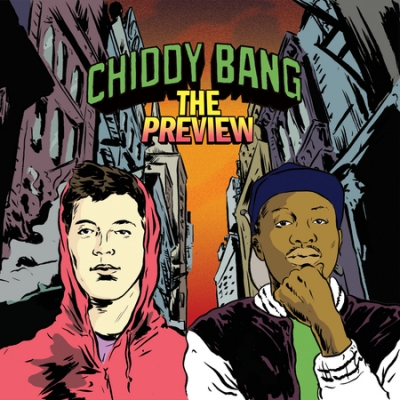
The Preview is exactly what it is packaged as: a preview. Standing as a placeholder for the duo’s upcoming debut album The Swelly Life, The Preview is an eight-track album: a perfect sampler of the group’s wide musical palette. For someone who may be new to the group’s music, this record is a perfect starting point, documenting their meteoric rise to fame.
“The main purpose of this release is to give our fans some new music while we finish recording our debut album, The Swelly Life. It’s called The Preview because it gives listeners a glimpse of what’s to come onSwelly,” says Xaphoon Jones.
The Preview features three tracks from the duo’s first mixtape, The Swelly Express, which was highly received and led to the group’s record deal with EMI. “Truth” features a sample from Passion Pit’s “Better Things”, “Opposite Of Adults” features MGMT’s “Kids”, and “All Things Go” samples Sufjan Stevens’s “Chicago”.
“Nothing On We” combines Chiddy’s clever, yet contemplative rhymes with the signature electronic beat from Xaphoon. Chiddy’s singing in the hook, oddly, slightly resembles Akon’s “Sorry, Blame It On Me” and features a shout out to Kanye West and his G.O.O.D Music record label with the line “And it isn’t what it seems / So just like Yeezy, we steady getting out our dreams / That’s G.O.O.D.”
Seventh track “Bad Day” samples the heartfelt Darwin Deez and while Chiddy’s verses are new, the remix itself is not. Xaphoon previously remixed the track on The Xaphoon Jones Mixtape Vol. 1, his first mixtape release. Serving as a perfect example of Xaphoon’s production talents, the synthesizer buzzing in the background is a great addition and keeps the track bouncing along at a fast pace. Chiddy’s rapping talents are also highlighted when clever lines such as “Happiness is a warm gun / Living fully loaded” are juxtaposed with somber reflections on how success has changed some of his relationships.
The record, much like the rest of the group’s work, is a fun, carefree listening experience. It should be taken into account that The Preview should be listened to and judged not as an album, but as a sampler of the band’s upcoming debut release. For this very reason, this review is not as thorough and has no actual score.The Preview serves as a perfect preview (how ironic, huh?) to the duo’s 2011 release and should be enough to tide old fans over, as well as win over new ones.
Positive
Standout Tracks: “Opposite of Adults”, “Bad Day (feat. Darwin Deez)”
Review: Jimmy Eat World – Invented
Jimmy Eat World – Invented
Released: September 28, 2010
Label: Interscope
Purchase: iTunes | Insound | Amazon
There are some things that just don’t change. Every year, fall rolls around, bringing in crisp, chilling breezes, reddening, brittling leaves, and for many, the songs of Jimmy Eat World playing in the background. Whereas some bands may provide the “soundtrack to your summer,” Jimmy Eat World has never been a summer band and they probably never will be. Some things just don’t change.
Or do they?
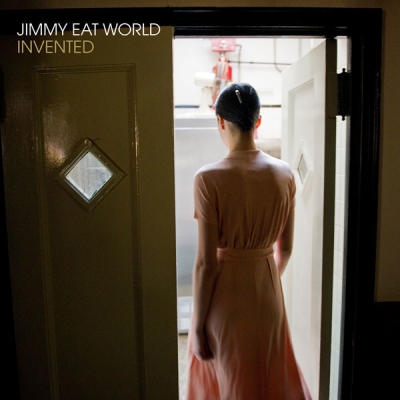
Jimmy Eat World’s seventh studio album, Invented, pushes the limits of the band’s musical spectrum, while still managing to satisfy their loyal fans. Despite the name, Invented is not an album that brings new ideas and innovation to the table. Rather, the record chooses to “reinvent” the band’s already strong musical roots, adding more and more dimensions.
Overall, Invented is a departure from the dancy, more pop-driven anthems found on Chase This Light. In this respect, the album can be seen as more of a progression from Futures or Clarity, with the same general organization. Invented does include some surprises though.
Opener “Heart Is Hard To Find” is a light, introspective piece that underwhelms on first listen. The song is definitely a grower, though, and its impact seems to increase exponentially each time the track is played. Generally speaking, the entire album follows this pattern, getting better with each successive listen. On the surface, Invented seems lacking, with almost no grandiose sing-along choruses, but deeper down, the album is chockfull of moments of sincerity.
Fifth track “Movielike” is a pivotal turning point for the album, changing the overall atmosphere. “Coffee and Cigarettes” directly follows, highlighting the new harmonies between Jim Adkins and Courtney Marie Andrews, who also provides backing vocals for “Heart Is Hard To Find”, “Movielike”, “Cut”, and “Invented”. (Rachel Haden also provides backing vocals on “Stop”.) “Coffee and Cigarettes” is a fun, addictive track that may indeed be more addictive than its real life counterparts (though having never consumed either, I may not be the best source).
The new vocals, as well as a song sung entirely by guitarist Tom Linton (“Action Needs An Audience”) are the most drastic stylistic differences that separate Invented from the rest of the band’s discography. “Action Needs An Audience” is raw and hits you in the face, a definite nod to the punk roots of the band. But despite these anomalies, every track sticks together as a cohesive unit, guiding you through the experience that is Invented.
And that’s what the album truly is and was meant to be. Invented underwhelms on first listen, but the entire experience keeps you coming back for more. After each listen, something new is discovered – a new gem is spotted, a hidden Easter egg is found. For the first time since Clarity, Jimmy Eat World has returned to the intricately planned sound that develops as you go, providing little instant exhilaration, but still managing to produce stealthily catchy hooks. Invented, in all respects, is the epitome of a “grower.”
The closing line of the album, “You don’t get to walk away, walk away now…It’s too late, you can’t walk away, walk away now” rings in your ears while the dreamy, guitar fades out, leaving you yearning for more. “Mixtape” is a perfect way to close the album and can already be considered one of Jimmy Eat World’s best, matching the caliber of past closers “23” and “Goodbye Sky Harbor”. For all intents and purposes, the closing line speaks the truth. You really can’t walk away from Invented.
While some things may never change, your first impression of Invented will most definitely change after repeated listens. Jimmy Eat World has indeed changed, almost matured in a way, and invites you to step in and be a part of that change.
8.6
Standout Tracks: “Stop”, “Cut”, “Invented”, “Mixtape”
Review: Ra Ra Riot – The Orchard
Ra Ra Riot – The Orchard

Released: August 24, 2010
Label: Barsuk
Purchase: iTunes | Insound | Amazon
Ra Ra Riot’s sophomore effort The Orchard is a step in the right direction for the band, trading the catchy pop choruses on The Rhumb Line for introspective lyrics about their own personal lives and how they have grown and developed. The soaring instrumentals and soft, reflective cooing from Wes Miles demonstrate strong musicianship from the band, but the album fails to impress holistically.
There is no doubt in my mind that the members of the band are incredibly talented with their individual instruments, but as a whole, Ra Ra Riot seems unable to combine these talents together as a cohesive unit. The creative bass lines, although quite intricately played, seem to have been turned up way too loud and distract from the other instruments. In the first two tracks, “The Orchard” and “Boy,” the boosted bass line is quite noticeable, and opens the album on a rather bad note (pun not intended). Otherwise, “Boy” is a touchingly reflective song and a great choice for first single.
The signature orchestral lines from cellist Alexandra Lawn and violinist Rebecca Zeller are stylistically brilliant, especially when combined with the energetic guitar playing from Milo Bonacci. The drums from Cameron Wisch keep the songs moving along at a decent pace, even though The Orchard features some of Ra Ra Riot’s slowest ever material.
“Too Dramatic” is a bright, poppy song, standing out from the comparatively somber first two tracks. Directly after “Too Dramatic,” “Foolish” once again returns to the slower, more thoughtful sound that pervades The Orchard as a whole and ultimately drags it down. As a whole, the record feels sluggish and lethargic, even when the band launches into moments of orchestral beauty.
At times, vocalist Wes Miles seems to be a dulled down version of Vampire Weekend’s lead singer Ezra Koenig. In fact, “Massachusetts” could almost be a Contra B-side. “You And I Know” features the voice of cellist Alexandra Lawn, which is touching lyrically and a breath of fresh air sonically.
Unlike their debut The Rhumb Line, The Orchard offers little variety between songs, making the album less intriguing to first time listeners. Instead of the vibrant energy found on The Rhumb Line, Ra Ra Riot takes time to build up the momentum on each song, before launching into lulling, orchestral perfection.
Altogether, the album remains rather drab and fails to really hook the listener. It is certainly an album that grows on you after multiple listens, but The Orchard is in no way, shape or form, a classic. It is, however, a big step forward for the band and hints at an extremely bright future for the already successful young band.
7.0
Standout Tracks: “Too Dramatic”, “You And I Know”, “Shadowcasting”
Review: The Dangerous Summer – Reach For The Sun
The Dangerous Summer – Reach For The Sun

Released: May 5, 2009
Label: Hopeless
Purchase: iTunes | Insound | Amazon
In any lifetime, there are numerous events that can impact a person greatly, for better or for worse. For The Dangerous Summer’s vocalist, AJ Perdomo, choosing to follow his dream and pursue music was one of those life-changing events. Throughout Reach For The Sun, AJ and the rest of the band prove that choosing to stay in music was a great decision, for themselves and for listeners everywhere.
Reach For The Sun, the Maryland band’s first full-length record, is packed with soaring, layered guitars, pulsing drum beats, and strong, emotional vocals. The Dangerous Summer is ready to prove that they are more than just a pop-punk band—they are a band that is here to stay.
Opening track “Where I Want To Be” kicks off the album on a fast pace, something that is quite normal for the band. Every song on the record is bursting with energy, powered by the talents of Tyler Minsberg on the drums. Standout track “Weathered” opens with the familiar intertwining guitars, before being swept away by the crooning of AJ Perdomo. Well-written lines like, “Well I’m an optimist / But only in a perfect world / I think I’m too stained / With all the negativity / From all the people in my way” are littered throughout the record and are driven home by the superb production of Paul Leavitt and songwriting from the band.
Where the band’s previous EPs have failed, Reach For The Sun picks up the ball and improves. “Surfaced” is reminiscent of the band’s second EP If You Could Only Keep Me Alive, but still matches the quality of Reach For The Sun. The familiar track “The Permanent Rain” (which has been on both of the album’s previous EPs) has been retouched and redone to meet the level of the band’s newer material.
Reach For The Sun’s main strength is its ability to connect with all sorts of listeners. AJ Perdomo’s sharp lyrics and powerful delivery have a sort of universal appeal that allows the band to reach through. Guitarist Cody Payne has said, “[Every song on this album] had their own little story in our lives while we were writing the album and seeing it come together in the studio. The album is overall very positive and about real life. AJ covered a lot of different ground – love, life, death, the past, the future…it’s all there.”
One of the only downfalls of the album is that at times, the band seems to be unwilling to move away from their trusty songwriting formula. The songs on the record sound very similar and the range of styles on the record is lacking. But when there is variety, the change is highly noticeable. The slow, thoughtful “Northern Lights” provides a change of pace that is gladly welcomed.
Reach For The Sun is a record that needs to be experienced and not described through words. The powerful vibes that the album gives off makes the album a genuine venture into the lives of band members AJ Perdomo, Cody Payne, Bryan Czap, and Tyler Minsberg. As far as personal albums go, Reach For The Sun is a memorable listen and is worth every second of the 41-minute album.
And who knows, maybe listening to Reach For The Sun will be a life-changing event for you.
9.2
Standout Tracks: “Weathered”, “The Permanent Rain”, “Never Feel Alone”
Connect